Key Takeaways
- Analytics provides the foundation for informed, data-driven SEO decisions that improve website visibility and usability.
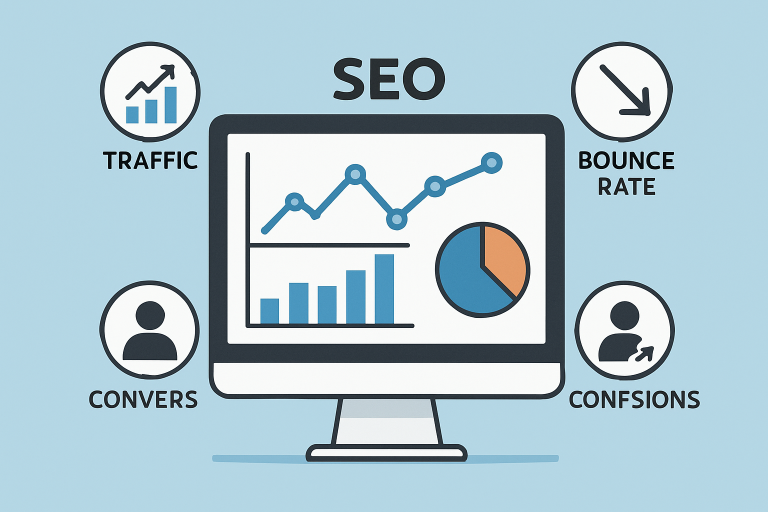
- Monitoring key metrics—such as organic traffic, bounce rate, session duration, and conversion rate—reveals which SEO efforts are most effective.
- Predictive analytics helps forecast trends, identify high-value keywords, and optimize content ahead of demand shifts.
- AI-driven SEO tools streamline analysis, uncover opportunities, and support strategic, high-impact decisions.
- Clear goals and KPIs align SEO activities with business outcomes, ensuring measurable ROI.
- Regular review and adjustment of strategies maintain relevance in a constantly evolving digital landscape.
- Leveraging analytics effectively leads to sustained organic growth, improved user engagement, and long-term competitive advantage.
Analytics has become the backbone of proactive and successful SEO strategies. Today’s digital landscape is saturated with websites and content, making it critical to stand out by using data-driven insights. With consumer search behaviors constantly evolving and search engine algorithms becoming increasingly sophisticated, relying on raw data enables you to cut through the noise and make informed decisions that directly impact your website’s visibility and usability. Leveraging analytics tools and actionable insights thoughtfully allows not only a boost to your search engine rankings but also helps widen your reach, connecting you with your ideal audience at the right time. For businesses seeking expert, results-driven support tailored to specific goals, agencies like https://victorious.com/seo-agency-seattle/ specialize in unlocking online potential through advanced SEO analytics. These partnerships can transform data into a roadmap for sustainable growth and online dominance.
Understanding the nuances of how users discover and interact with your website is the starting point for meaningful SEO improvement. Analytics act as a lens, offering clarity on what’s already working and, more importantly, pinpointing where there’s still room for improvement. They provide a clear window into which SEO tactics generate the highest impact, allowing for more informed decisions on resource allocation and keyword targeting. By tracking critical data points such as user flow through your site, click-through rates on specific keywords, and conversion patterns by channel, you gain deep, practical insights that can fuel long-term growth. These numbers can also highlight barriers to conversion, content gaps, or technical issues that may have otherwise gone unnoticed. Over time, this approach leads to a cycle of continuous optimization and sustainability in your SEO efforts.
Understanding the Role of Analytics in SEO
SEO analytics tools, as well as well-established third-party platforms, provide a comprehensive view of how users find and interact with your site. These tools go far beyond simple traffic counts, revealing actionable data on your highest-performing content, frequent user pathways, and top acquisition channels. You can see, for instance, whether most of your organic traffic is landing on blog articles or product pages, or if people are dropping off your site after hitting certain landing pages. Armed with this knowledge, you can tailor your approach to reduce friction and increase engagement. These insights enable you to systematically optimize your website for improved search rankings and a more seamless user experience. Delving deeper, these tools help decode complex site behaviors—such as page scroll depth and exit pages—so you can fine-tune everything from navigational structure to keyword placement and strategic internal linking for maximum SEO impact.
Key Metrics to Monitor
- Organic Traffic: The lifeblood of any SEO strategy, organic traffic refers to the number of visitors arriving via unpaid search engine results. Tracking organic visits over time reveals whether your current SEO initiatives are yielding results or falling short. Monitoring fluctuations also helps you respond quickly to unexpected dips, which may signal changes to the search algorithm, increased competition, or site errors. A well-optimized site will experience steady or growing organic traffic, reflecting improved search visibility and increased user engagement.
- Bounce Rate: This metric shows the percentage of visitors who leave after viewing just one page. High bounce rates may indicate irrelevant content, poor user experience, slow site speed, or technical issues. Investigating pages with high bounce rates can reveal areas where content isn’t meeting user intent, enabling targeted improvements that keep users exploring your site for longer, ultimately contributing to improved SEO performance.
- Average Session Duration: The time users spend on your site provides valuable insight into the quality of your content and its ability to engage website visitors. Longer sessions often correlate with compelling content, intuitive structure, and higher chances of conversions. Conversely, short average durations might indicate that users aren’t finding what they need, highlighting opportunities to enhance value or interactivity on key pages.
- Conversion Rate: Monitoring the percentage of users who complete desired actions—like newsletter signups, purchases, or form submissions—directly connects your SEO investment with measurable business outcomes and ROI. Analyzing which channels, keywords, or landing pages drive the highest conversions provides evidence for scaling what works and addressing bottlenecks where potential leads are lost.
Utilizing Predictive Analytics
Predictive analytics takes your SEO insights a step further by leveraging historical site data, cutting-edge machine learning algorithms, and artificial intelligence to forecast future performance trends. By analyzing patterns in site seasonality, scoring the relative potential of new or existing keywords, and anticipating shifts in audience search behavior, predictive tools enable you to prioritize high-value opportunities before your competitors do proactively. For example, these systems can help you identify rising search topics or trending keywords early, allowing you to create and optimize content ahead of major demand spikes, thereby positioning your site for an influx of relevant traffic when interest peaks. This approach helps maintain your visibility as user interests and search queries evolve. Forbes explores how predictive analytics is fundamentally changing how marketers approach SEO, creating a decisive advantage for organizations that embrace these techniques.
Implementing AI-Driven Tools
The rise of artificial intelligence has revolutionized many aspects of SEO, introducing tools that can perform deep analytical tasks at scale, identify trends, automate insights, and provide actionable recommendations in a fraction of the time it would take to do so manually. Platforms now integrate AI with traditional SEO data to keep you informed as algorithms shift and search landscapes change. These intelligent platforms can quickly identify underperforming content that needs updating, uncover link-building opportunities, assess page performance, and even generate preliminary content drafts that align with searcher intent. With AI-driven analysis, routine tasks become streamlined, freeing up your time and resources to focus more on high-impact strategy, creative campaigns, and advancing your site’s long-term authority and visibility in search results.
Setting Clear Goals and KPIs
Setting clear, measurable goals and establishing actionable key performance indicators (KPIs) is crucial for evaluating whether your SEO tactics are truly working. Effective goal-setting may include increasing organic traffic by a set percentage over six months, achieving top-three rankings for a priority list of keywords, or significantly improving your site’s overall conversion rate. KPIs offer benchmarks that align daily SEO actions with broader business outcomes, ensuring that every optimization or content update supports tangible, growth-producing objectives. When SEO activities are closely tied to business needs, it’s easier to demonstrate value to stakeholders and justify continued investment in your organic growth strategy.
Regularly Reviewing and Adjusting Strategies
The digital landscape is always evolving, and what’s effective today may need updating tomorrow. By reviewing your analytics data on a regular schedule—whether weekly, monthly, or quarterly—you’ll be able to track campaign results, discover new ranking opportunities, and spot emerging concerns before they can negatively affect your performance. Routine audits and data reviews provide invaluable feedback on which aspects of your strategy are delivering results, so you can double down on strengths and adjust or abandon areas that aren’t moving the needle. This cycle of continuous analysis and responsive strategy-reshaping keeps your SEO initiatives relevant, cutting-edge, and aligned with changes in your business and the broader search ecosystem.
Final Thoughts
Analytics is the cornerstone of sustainable, scalable SEO success. By consistently monitoring the right metrics and leveraging predictive analytics and AI-driven tools, you can make more informed, data-driven decisions that enhance your website’s long-term organic traffic and visibility. When you follow a process founded on real data and measurable goals, you position your website to thrive even as algorithms and user preferences change. In the rapidly evolving world of digital marketing, establishing a robust analytics foundation ensures that every decision supports ongoing growth, providing your business with the competitive advantage it needs to stay ahead of the curve.